
Francisco (Paco) de la Cruz
Francisco (Paco) de la Cruz
Contact Menu
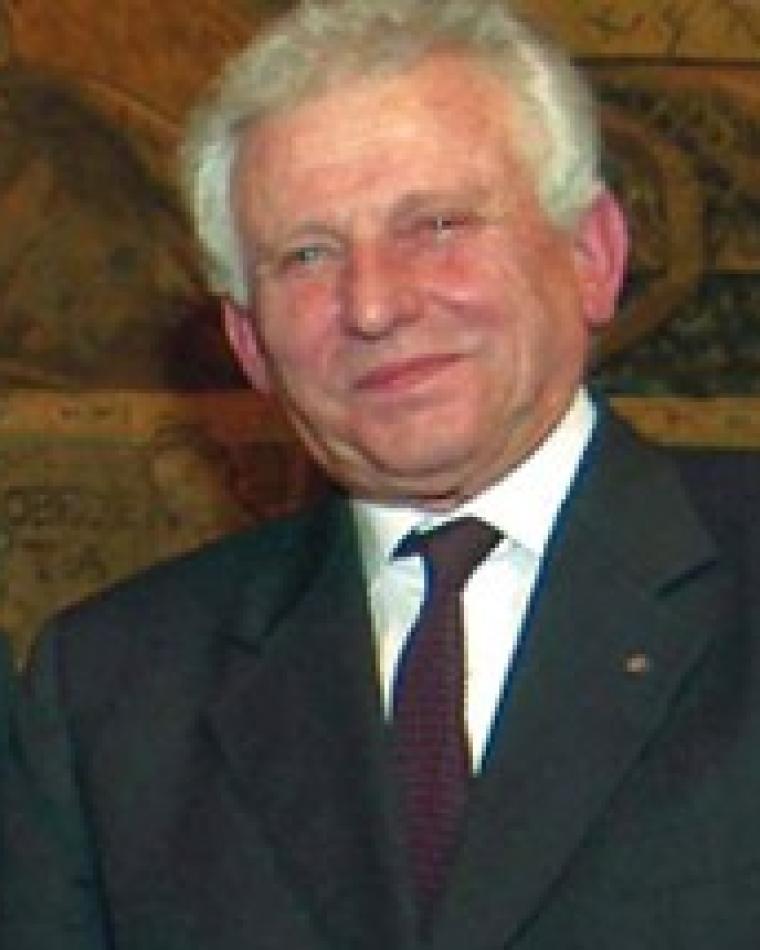
Francisco (Paco) de la Cruz passed away quietly on May 19, 2025. The scientific community has lost a legendary scientist and researcher. His family and friends mourn the loss of this kind, loving, and gentle soul. The world is a sadder place with his passing.
Paco was born in 1938 in Barcelona, Spain, during the Spanish Civil War. He was home-schooled by his mother who was forbidden to work professionally as a teacher by Franco’s government. His family moved to Argentina in 1951 for better educational opportunities for Paco and his sister. He started his undergraduate education studying civil engineering at the Universidad Nacional de Córdoba in Córdoba, Argentina. He later transferred to the Institute of Physics in Bariloche, Argentina, now known as the Instituto Balseiro, named after its founder, Jose Balseiro. Paco received his undergrad degree in 1960, a masters in 1961 and a PhD in 1968 from the Instituto Balseiro. After a Post Doc at Brown University, he returned to Bariloche in 1972 where he remained until his passing.
Much of the political turmoil that convulsed Argentina from 1974-1983 did not impact the Instituto Balseiro because of its isolation and remoteness. For all of Paco’s career, it was a quiet place to study, do physics, and raise a family. Which he did extraordinarily well with his wife, Maria Elena, who was also a physicist.
Paco had a long and productive career in low temperature physics. Bariloche Argentina was rural place in the early days without all the supporting infrastructure we take for granted in the United States. Paco used to tell a story, perhaps apocryphal, about John Wheatley, a visitor to the lab, who needed cooling water for a vacuum pump. The nearest water was thirty feet away in a stream. Wheatley got a shovel and dug a ditch. Nothing was easy, you only made progress by hard work and perseverance. Paco had plenty of both.
By the end of his career, he had turned his low temperature lab in Bariloche into a research facility that was highly respected and known around the world. He graduated 22 PhD students who have gone on to enjoy successful and impactful careers.
Paco’s most well-known work is in vortex physics in high Tc superconductors. He, along with his students and collaborators, uncovered many of the fundamental issues in vortex behavior that needed to be understood and overcome for successful commercial applications. We had the good fortune to work with Paco on some of these issues and our time together is something we will always treasure.
Paco has won numerous awards and prizes including the Teofilo Isnardi Award, the Dr. Ricardo Gans Award, a Chevalier of the Academic Palms by the French Government, a Fellow of the Argentine National Academy, a Fellow of the APS, a Member of the Third World Academy of Sciences, a Fellow of the Institute of Physics, the Fundacion Bunge y Born Prize and a member of the US National Academy of Sciences.
Paco is survived by a son, a daughter and his beloved wife Maria Elena. He was lionized professionally and deeply loved by family and friends fortunate enough to have known and worked with him. He will be missed by us all.
David Bishop
Daniel López
Flavio Pardo